
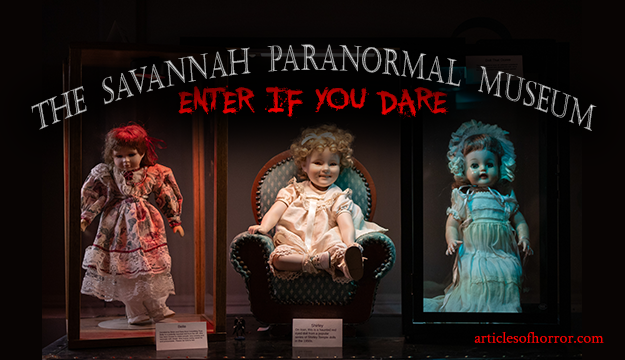
Savannah, Georgia is known for many things – draping Spanish moss, historic cobblestone streets, and undeniable Southern charm. However, it is also the most haunted city in America.
Christopher Saucy, co-owner of The Savannah Paranormal Museum, recently spoke with Articles of Horror to discuss his vast collection of eerie objects. From wicked dolls to a Thai demon, discover what awaits behind the doors of this dark and fascinating museum.
Step inside Savannah’s newest premier home for the haunted.
AH: Hi Chris. I’ve read that you have been called a Renaissance Man. Can you elaborate and tell us a little bit about yourself?
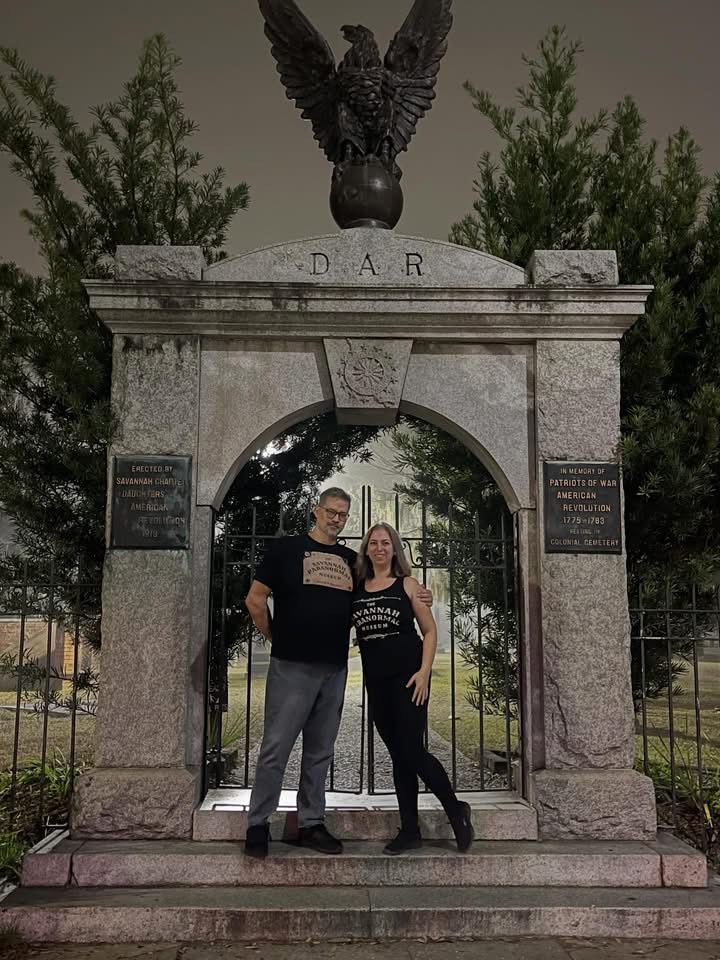
Chris S./The Savannah Paranormal Museum: When I got out of the army, I moved to Savannah, Georgia in 1993. Since then, I have been a local theater professional, puppeteer, film director, stage director, and writer. I’ve owned an improv Shakespeare theater company. I’ve started several ghost tour companies.
The bottom line of everything I do is story-telling. That is the ultimate calling that I answer to – trying to associate the human experience with how we communicate with each other. And a large part of my life has been collecting and exploring ghost stories. I started hunting ghosts when I was six years old in Hamburg, Germany and I’ve been hunting ghosts ever since.
(Christopher Saucy also hosts “The Most Haunted City on Eath” – available everywhere podcasts are found.)
Pictured: Christopher Soucy and Megan Jones, co-owners of The Savannah Paranormal Museum
AH: So you were a brave, brave child.
Chris S./The Savannah Paranormal Museum: Actually, I was a scared, scared child. I found in my life that by actively pursuing the things that scare me the most, I could kind of mitigate fear. The more I knew about something, the less I would fear the thing.
AH: Why did you choose Savannah as the home for your paranormal musem?
Chris S./The Savannah Paranormal Museum: We began to think about how Savannah is a haunted destination. People travel here because of the ghosts and ghost stories and given that the haunted tourism in Savannah was so high, we thought, wouldn’t it be nice if we could provide something that was complimentary to these ghost tours and locations (not competitive, but complimentary). A perfect idea would be to offer people an opportunity to see and experience haunted objects in close proximity.
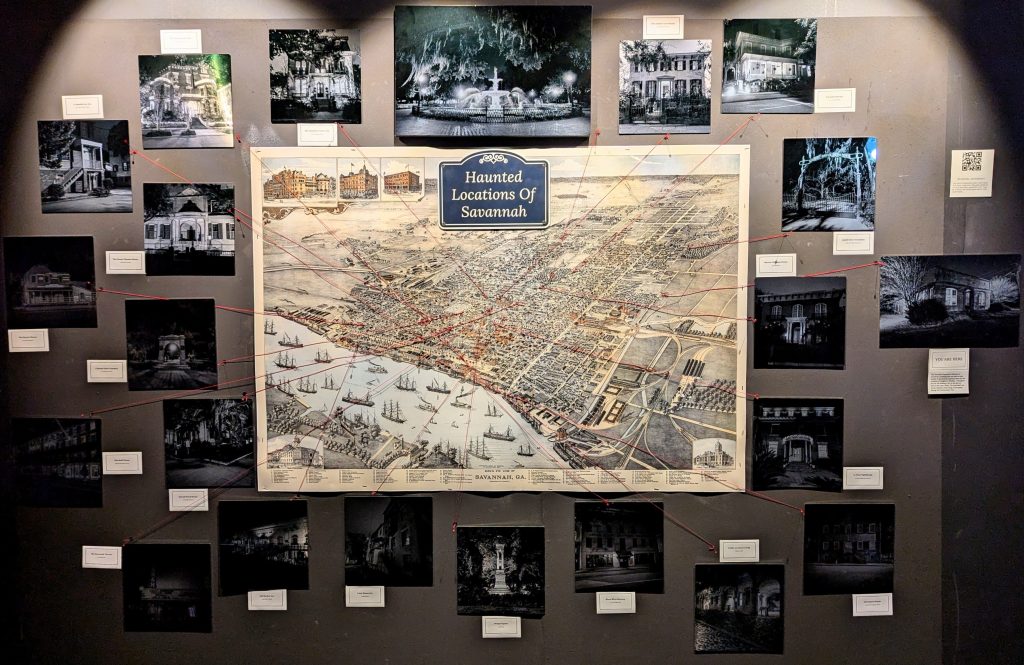
AH: Can you give us a little background on how the museum came to be? What decisions led to opening a paranormal museum?
Chris S./The Savannah Paranormal Museum: Spending my entire life associating with ghosts and ghost stories, a lot of people just kind of call me “the ghost guy.” They think, oh, I know a guy who might have an answer to this weird thing that’s going on. So, I get calls at all hours of the night. I’d get all of these complaints and worries and things. Over time, I also would get objects and people would [say], “I brought this into my house and it started acting weird,” or, “I started having weird feelings about it.” And they would deposit them with me as if I would take care of it, which I did not know how to do.
My wife has this simple rule, and that is: no haunted objects in the house. It’s a good rule. So, we would keep these objects in our shed. My shed slowly started becoming an ominous thing. It is the most haunted shed on the block. Because of that, we oftentimes would muse – what are we gonna do with this stuff? How are we going to deal with it?
(The proper way to dispose of a haunted object is usually a proper burial. Don’t burn it. Don’t destroy it. Give it a proper burial.)
These were items held enough fascination for me that I kept them. I didn’t want to get rid of them – but we also didn’t want them in our house.
AH: What makes an object eligible for inclusion? How do you know if you’ve been given something that is not haunted or paranormal?
Chris S./The Savannah Paranormal Museum: Primarily, like I stated before, it’s all about storytelling. When an object comes with a story attached to it, we take it at face value. I find that a story actually compels people to invest in what the object represents and what might be going on. What we then do is a series of investigative things with equipment and we have a friend who is a very gifted and talented psychic who comes in and helps us evaluate these things. But over time, it’s our experiences that help model what we tell or what we present. So things that we have in our Artifacts Room are things that we specifically had experiences with, but we also need things that have stories that we can latch onto.
That becomes this big question — Are the stories true?
Well, that’s difficult because some of these stories are very old and passed down from person to person. We know the telephone game can really mess up a narrative. However, at the heart of the ghost story is this relationship between the person and the object, ghost, and experience. We’re asking you as the visitor and viewer of the museum – what do you feel? What do you think?
Some things have come [in] with full case reports on them, but some [do not], like a monkey with no batteries that would respond to ‘yes’ or ‘no’ questions with a clang of its symbols. Is this item somehow connected to a spirit or is the person lending their psychic energy to this object? I think there is so much to discuss about faith and fear and how we allow those things to determine our perception. It becomes the museum’s guiding light.
We’re not here to prove or disprove anything. We’re here to give you [the visitor] an opportunity to question how you feel about these things.
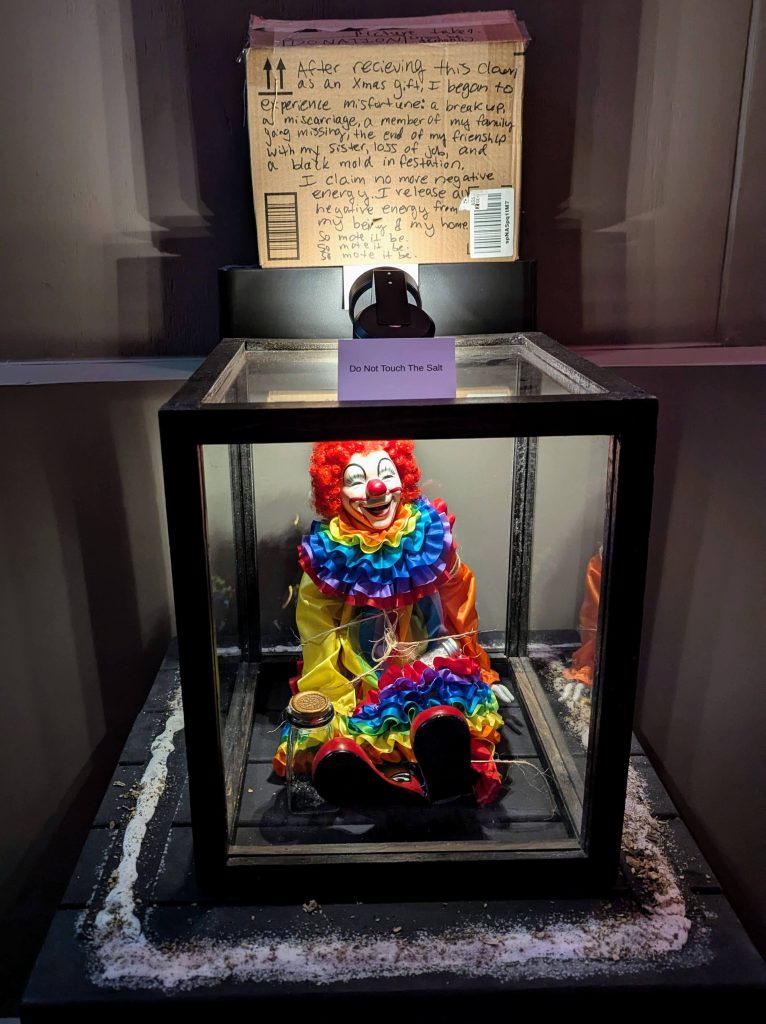
AH: What are the strangest stories you can share regarding objects in the museum? How did they come into your possession? What happened in your care?
Chris S./The Savannah Paranormal Museum: One of the first experiences we had with any of the artifacts in the museum was the Kumanthong. The Kumanthong is a very bizarre custom in Thailand where when a child died in infancy or during childbirth, the corpse would be roasted and gilded in gold. The word Kumanthong actually means “Gilded Child.” This effigy would be given back to the family and the family would care of it – give it offerings and it include it in their lives. The life that the baby should have led is being led in a fortuitous way. All of the fortune that could have befallen on the child will then fall upon their family.
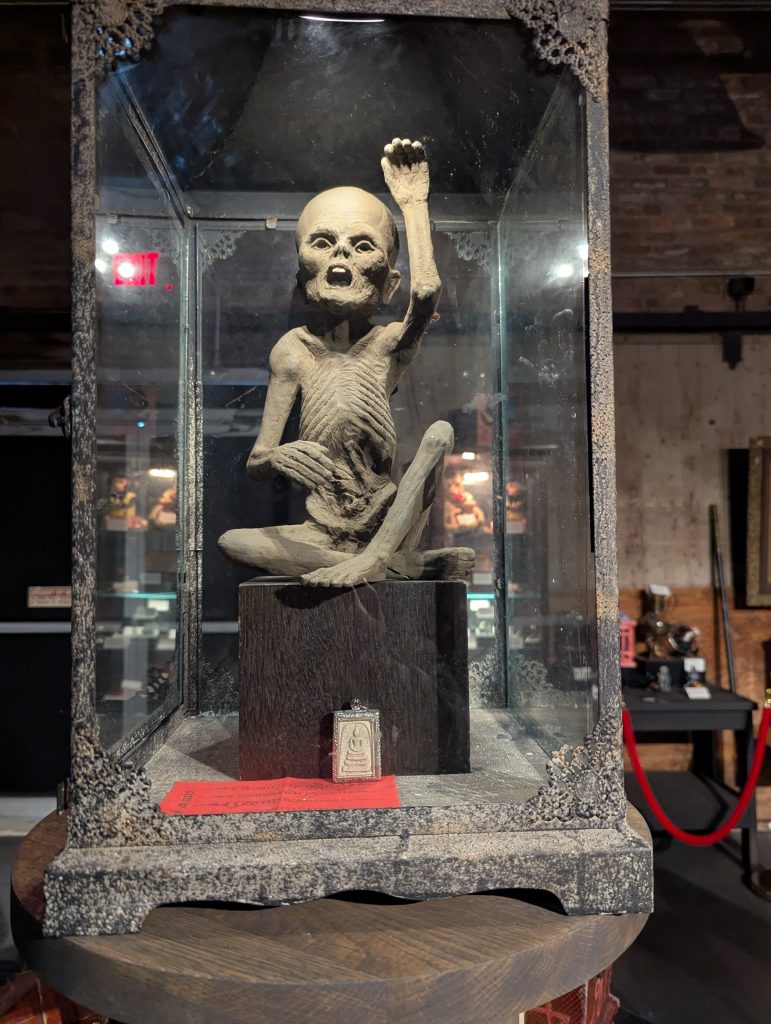
It’s very rare to [obtain] a Kumanthong because [Thailand] outlawed the practice.
When we received it, there were two things that were strange. One was that its foot had broken off in shipment. The second was that it smelled like rotting meat, just this noxious, horrible smell. We weren’t sure if we could display it.
Around this time, we invited our psychic medium over to get a zero reading of the museum space. He almost immediately starts talking about a frantic woman who is running around, showing him something. [The psychic] explains that this mountain witch had made this vessel as a coffin to house a demon [who is] somehow getting out.
[The witch] kept saying that “the vessel is broken” and the psychic asked if it meant anything. We had just gotten the Kumanthong with its broken foot. The psychic said, “She’s showing me the roof of houses… Does that mean anything to you?” And I remember reading about a practice in the Philippines where a sacred mortar would be put on the roof of houses to keep demons from coming through the thatchwork.
I spent the next couple of days trying to find a monk in Thailand, who explained that there is a special concoction called a “hundred year sacred herb” that keeps demons away. He sends me an amulet. The moment I put it in with the Kumanthong, the rotting smell ceases.
In many cases, it’s about [having] faith in an object that [empowers its] protective nature. You do have to be culturally sensitive. There are so many variables and we have this scattershot faith of being all-encompassing. We have to use every tool in our arsenal.
AH: What measures do you take to protect yourself? Do you have a back-up plan for when something is in your possession and you’ve realized that you bit off more than you can chew?
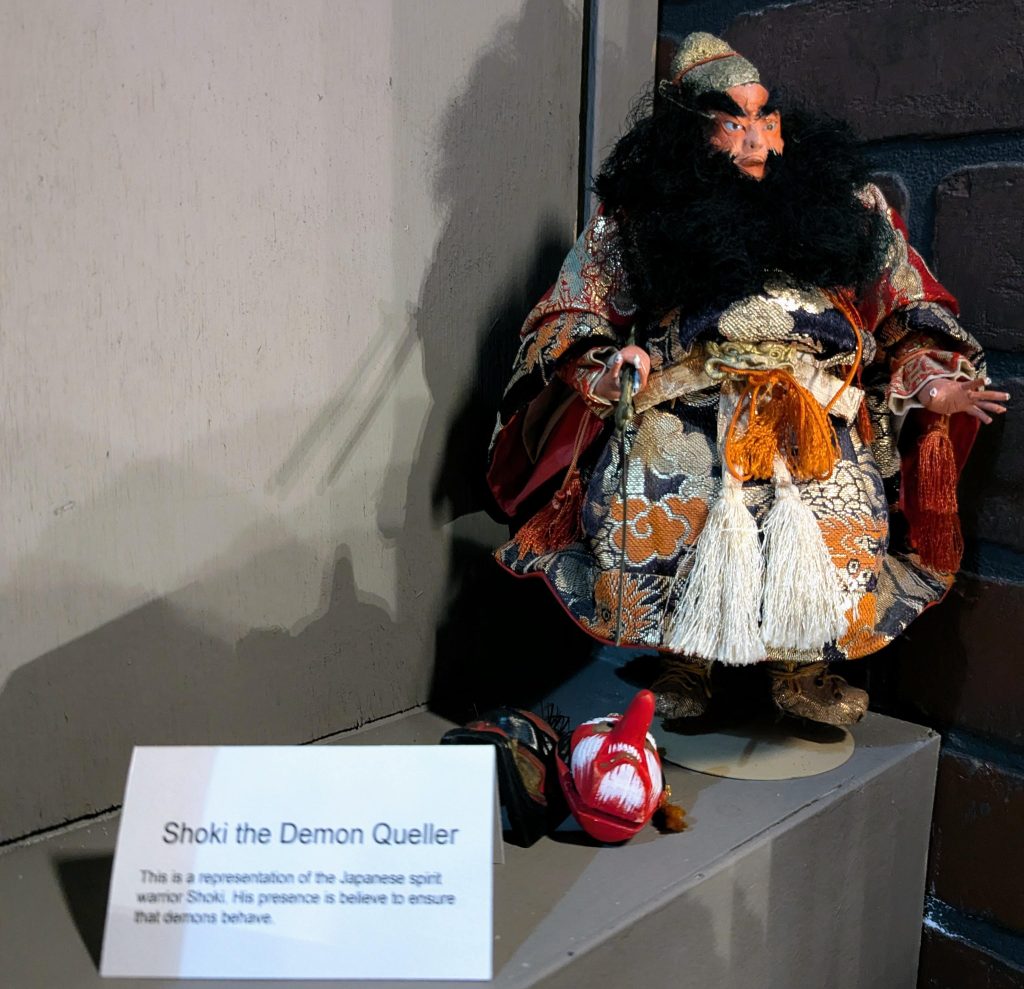
Chris S./The Savannah Paranormal Museum: We’ve actually encountered that and luckily what we’ve done (and the museum is full of them, too) is we cultivate… With everything that [we] have that is haunted, we also try to find things that are blessed or protective. Every culture on the face of the earth has dealt with these sensations, these feelings, and have created protections. We ascribe to the idea that every culture’s protections belong and work for them and there’s no reason to deny the viability of these things. And so we started collecting Tibetan, West African, and European charms (things that protect people) and we study rituals and ways that other cultures deal with these things. We have had to call upon them to help quell things that are frightening or disturbing.
In the museum, we are constantly updating. For everything you see in the museum that is a haunted object, there are things that you don’t see that are protective.
AH: What would you say to skeptics?
Chris S./The Savannah Paranormal Museum: The idea behind the paranormal museum is to examine how people, civilizations, and society have dealt with the unknown and things they could not explain. They filled those gaps with superstition and stories. We can track depictions of ghosts and hear stories of the dead and the living to ancient Babylonia, and see that we’ve always been wrestling with that mystery. The opportunity here is to see how people even today are wrestling with the mystery, the unexplained, and the things that they science away to remain open to the idea that what you’re really observing is not whether it’s true, but it’s whether it’s impactful. }
How does society deal with these things? Because there may come a time when we’ll be laughing about how people were afraid of ghosts. There may come a time when death doesn’t have the same sway over us. But as long as it remains a mystery, this is an opportunity to explore how people interact with the mystery. It’s not about what you believe as much as how other people interact with the mystery.
AH: What is your hope for visitors of the museum?
Chris S./The Savannah Paranormal Museum: It’s all about opening your mind. Being open minded in this arena – the paranormal, the supernatural – may lead you to be open-minded about cultural differences, societal differences, and open-minded enough to allow for conversations in other fields. So, whenever we are faced with the unknown, the choices are to hide from it, or to explore it.
We’re encouraging exploring.
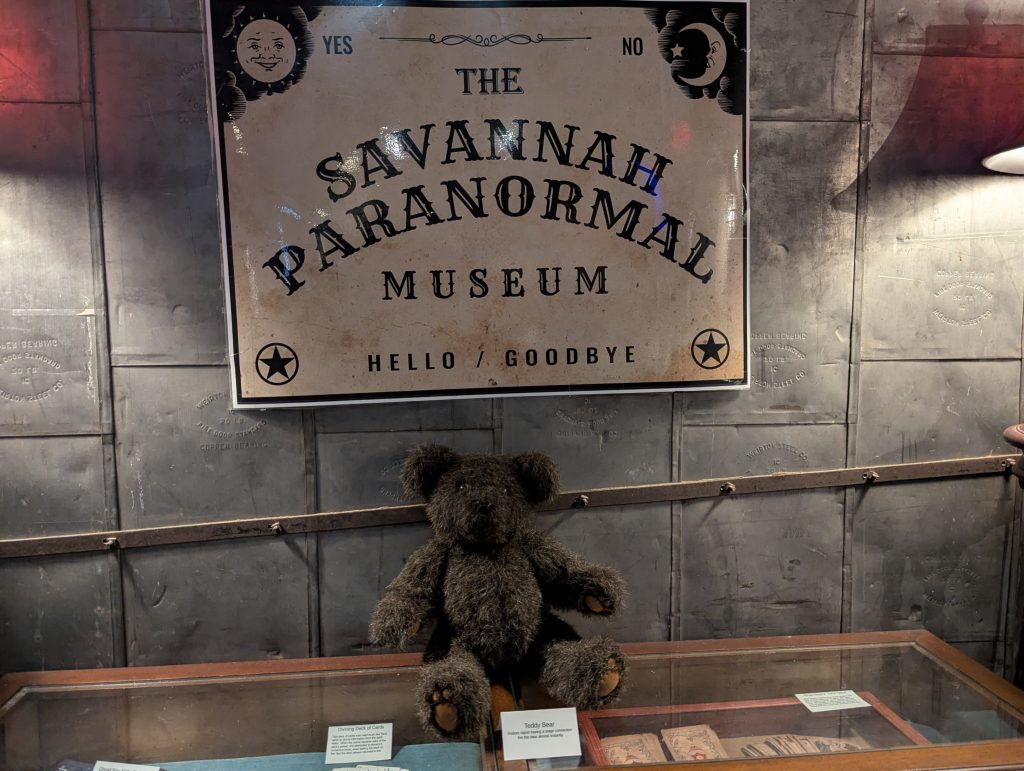
Visit The Savannah Paranormal Museum online or in person at 415 West Boundary St, Savannah, GA. They are also on Facebook and Instagram.